I worked with a fintech startup that made private investing more accessible by enabling capital raisers to bring investors into private deals. Historically, the company operated through a high-touch, relationship-driven service model such that customer interactions were managed manually.
Scaling the business required introducing a digital platform to automate key workflows particularly around investor onboarding. However, introducing a new tool risked breaking internal workflows, raising the need to document and evaluate the end-to-end process.
75%
INDUSTRY
Fintech · Private Investing
Business Objective
Operational Readiness for Platform Launch
MY ROLE
As the Head of Product & UX, I led end-to-end discovery leveraging AI tools to accelerate research and translating insights into actionable service blueprints.
CROSS-FUNCTIONAL TEAM
Leadership, Sales, Marketing, Account Management, Engineering
THE TASK
Enable a 0→1 transition from undocumented, manual workflows to a hybrid, platform-supported operating model. Map end-to-end processes, identify operational risk, and prepare teams for change without disrupting service.
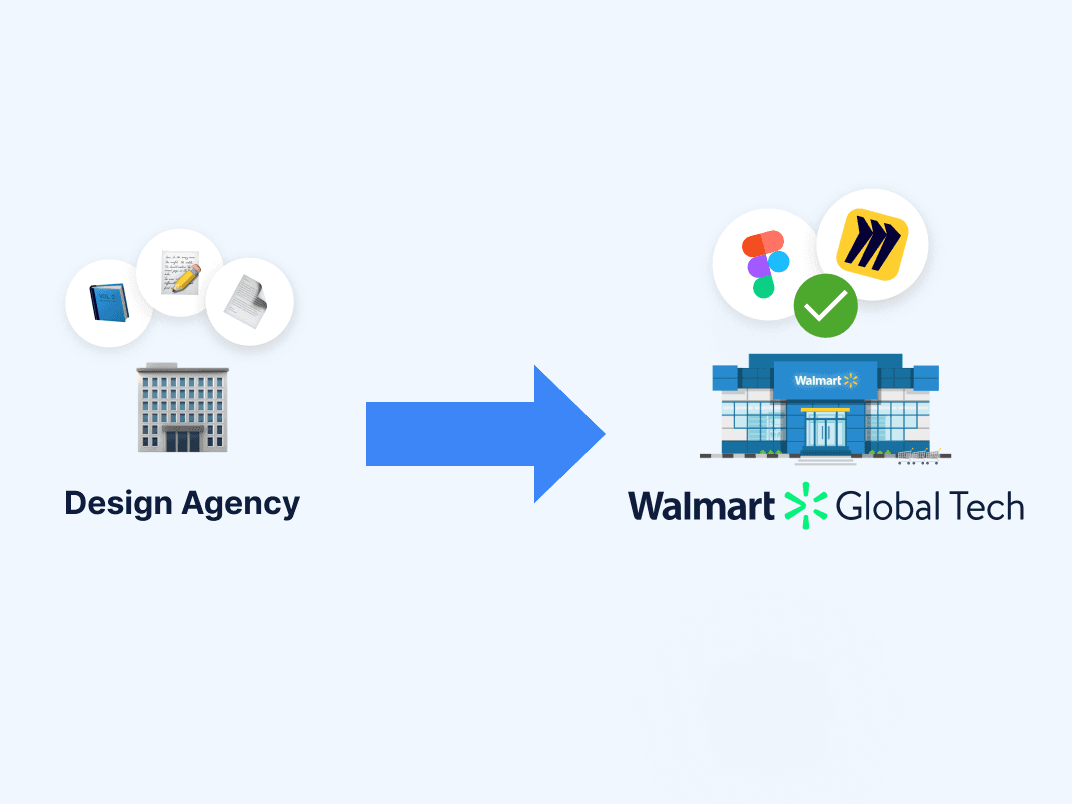
The MVP platform was being developed by an external agency without fully understanding the existing service operations. Digitizing onboarding would directly impact internal workflows, customer expectations, operational dependencies, and compliance steps.
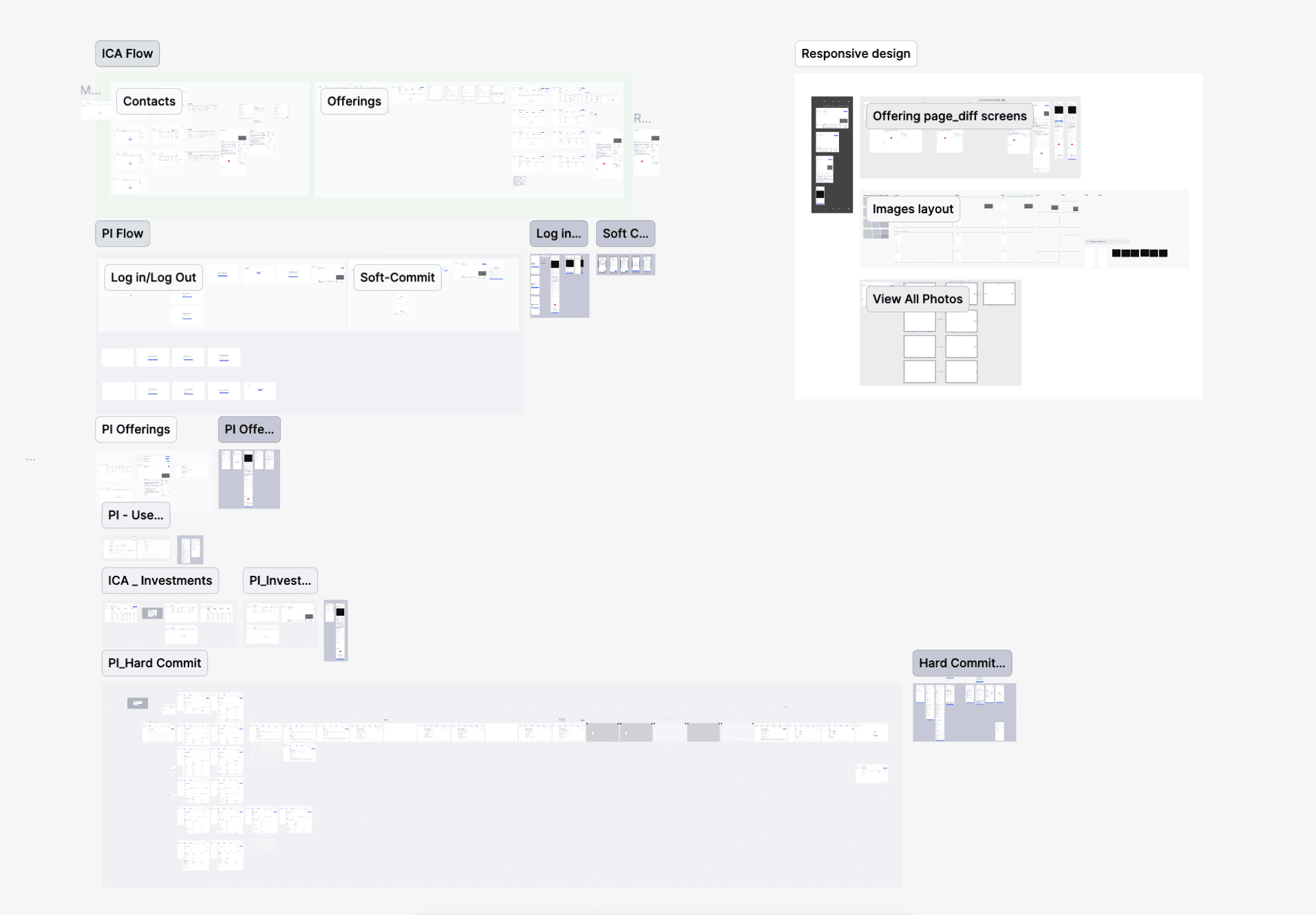
Designs were developed without looking at the end-to-end experience.
After joining the company, I first needed to understand the industry and the problem space.
Rather than spending months in traditional discovery, I strategically used multiple AI tools to accelerate research, synthesis, and mapping, which allowed me to compress weeks of work into days.


"Ask Fathom" is an AI-powered, conversational search tool that allows users to extract insights from recorded meetings. Video credit: Fathom AI.
To understand the problem space end-to-end, I needed a service blueprint of the traditional private investing process. I created refined AI prompts with ChatGPT and then tested both Claude and Lovable to see which would generate a more useful output.
Claude and Lovable produced end-to-end service blueprints that mapped traditional workflows and user interactions from private deal sourcing to asset management.
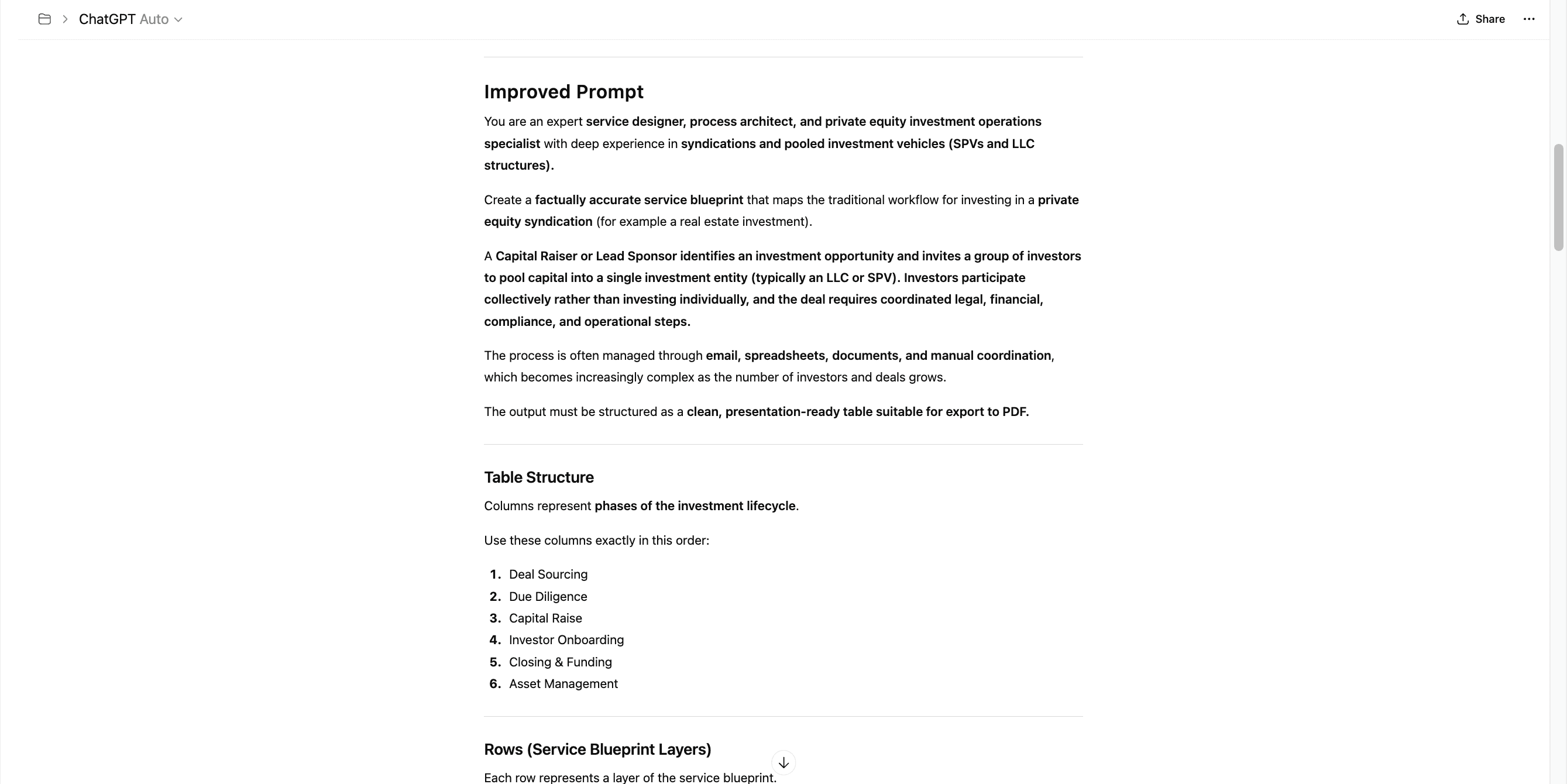
Meta prompting with ChatGPT.
Step 1
Create structured AI prompts based on context and goals.
Step 2A
Feed prompt into Claude to generate service blueprints.

Step 2B
Feed prompt into Lovable to generate service blueprints.

Step 3
Evaluate both service blueprints, refining prompts as needed, and exporting the results
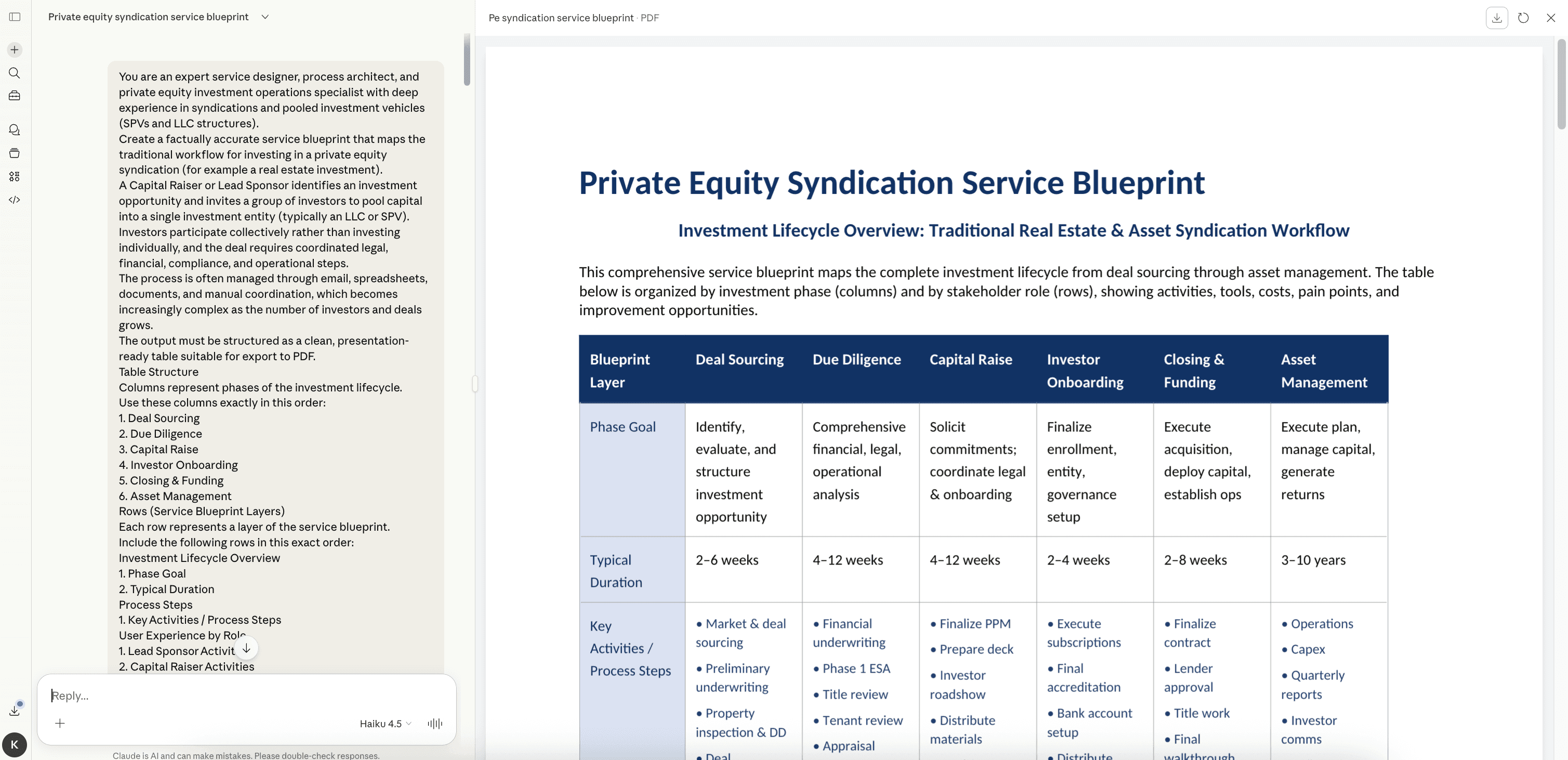
The service blueprint generated by Claude was general and lacked specificity.
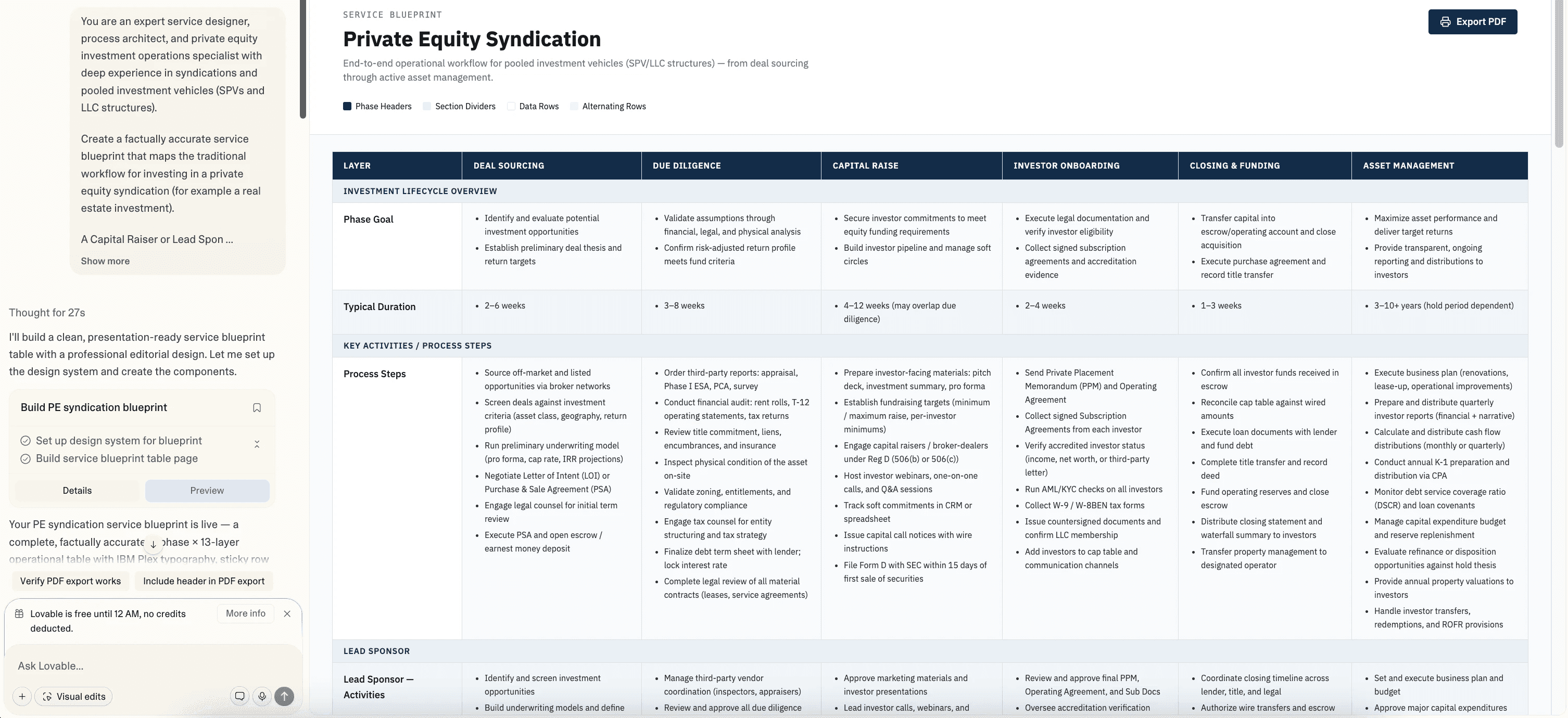
The service blueprint generated by Lovable was more detailed and easier to read.
PROCESS MAPPING OUTPUTS
Using insights from industry workflows, internal workflows, and customer feedback, I created several service blueprints of the current and future state of the customer experience.

End-to-end flows highlighting risks and automations.
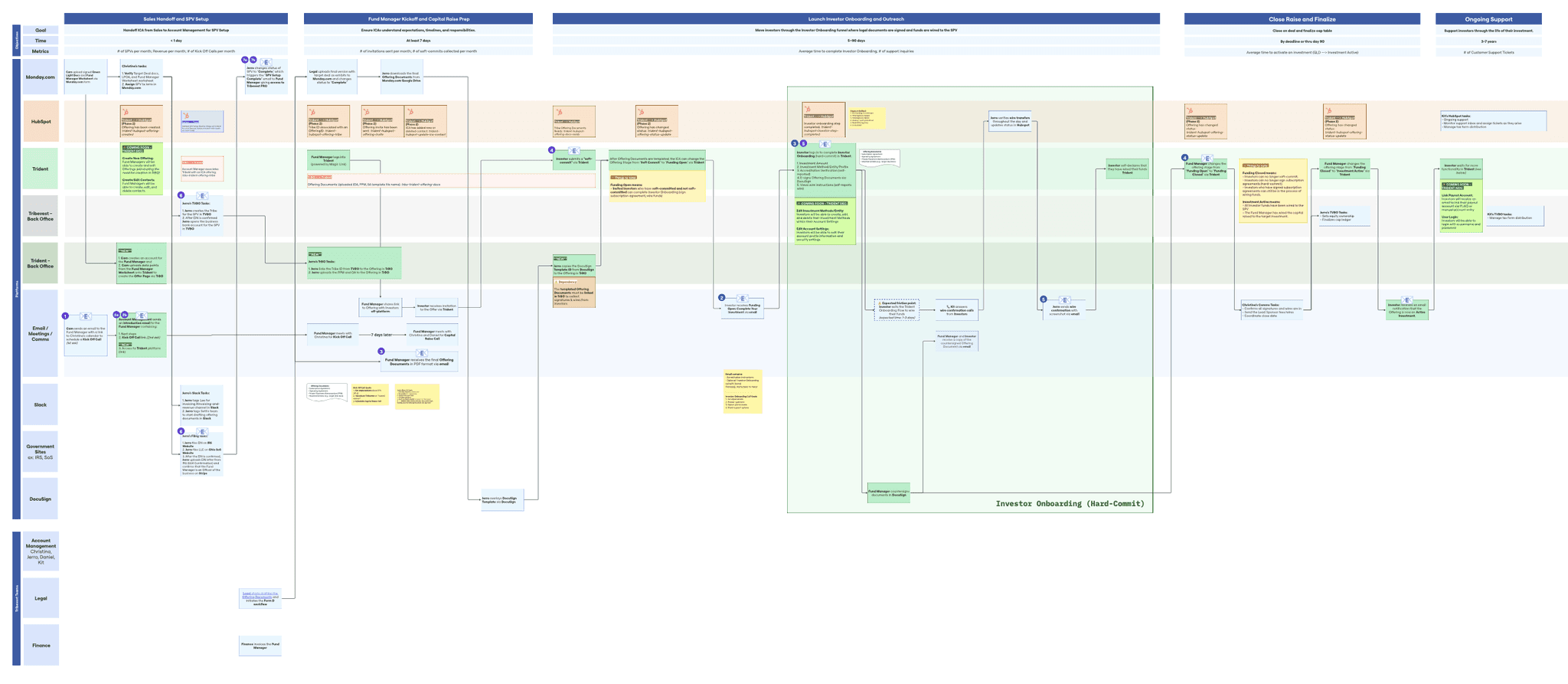
End-to-end flows across multiple tools and platforms.
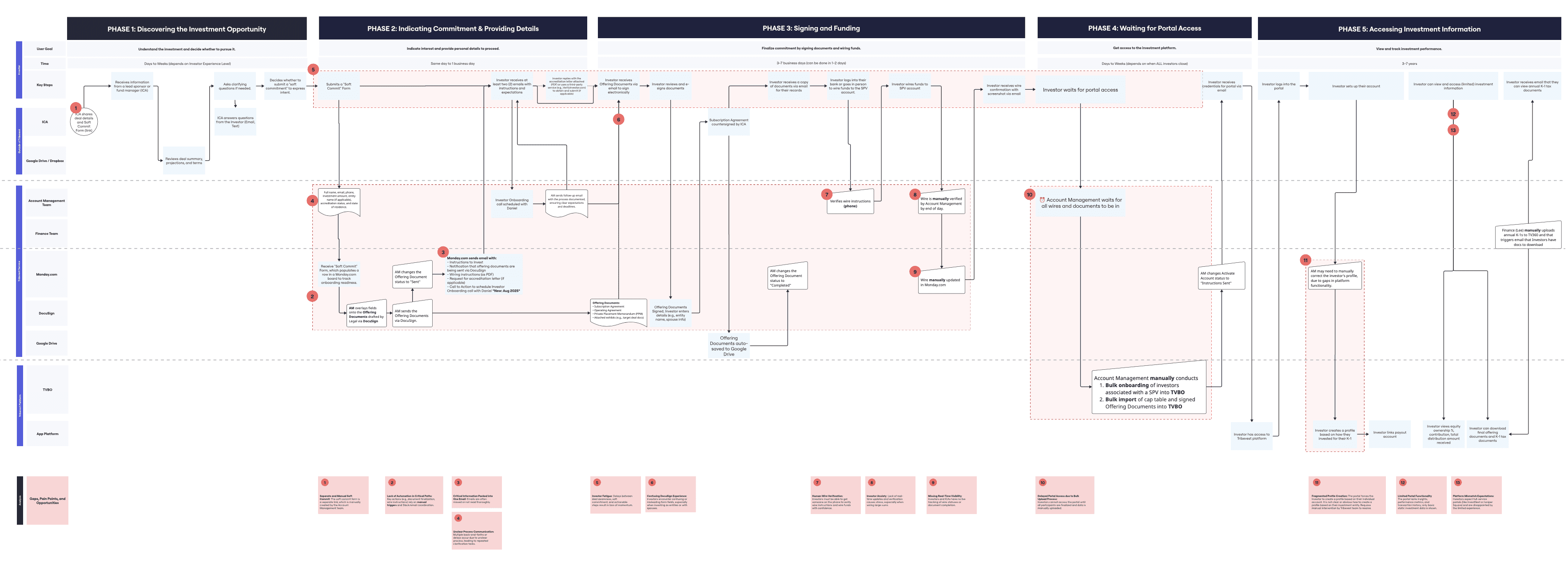
Investor experience highlighting known pain points with the existing service.
The mapping process uncovered multiple types of operational risks as a result of the new platform. These insights helped highlight where service breakdowns could occur.
Fragmented customer tracking
Incomplete back-office infrastructure
Customer communication gaps
Fragile operational handoffs
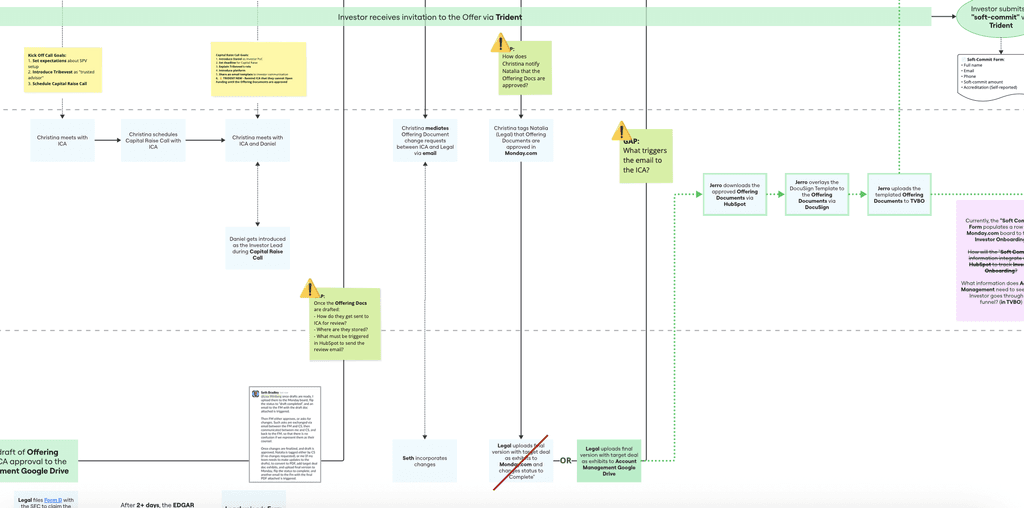
I created detailed service blueprints in Miro annotated with risks and dependencies.
Findings were communicated through team-wide meetings with an emphasis on areas of high risk to the customer and the business. Recommendations ranged from technical responsibilities to department-specific action items.
For Tech Team:
Configure back-office tooling to bridge back-end systems, internal workflows, and customer interactions for a unified experience.
Complete tech integrations to ensure the flow of information between platforms.
For Sales & Account Management Teams:
Consolidate customer tracking tools so customer information is tracked in one place
Create detailed SLA's to minimize disruptions in internal handoffs and external communications.
IMPACT
Shifting from Unknowns
to Strategic Clarity
Clear prioritization of high-impact and high-risk areas
Team readiness ahead of new automations
Cross-team alignment on how services actually worked
Reduced ambiguity during a critical transition
Savings
Outputs
Final Thoughts: This project reinforced that design decisions can shape how an organization operates, scales, and delivers value. By using AI as an accelerator, I quickly mapped operations, surfaced risks early, and aligned teams around a shared model. This approach worked to strengthen trust and consistency between customers and the business.