Reducing $1M Quarterly Vendor Spend by Hiring a New UX Team
Walmart relied on a design agency for UX/UI services, costing $1 million per quarter. However, the work consistently failed to meet internal quality standards and design system compliance.
In order to reduce vendor costs and increase continuity, the department chose not to renew the contract and needed to transfer 9 in-progress design initiatives into the internal UX organization.
69%
8
designers
INDUSTRY
Enterprise Software, Corporate Responsibility & Governance Technology
Business Objective
Cost Reduction
MY ROLE
As the Senior UX Manager, I led the transfer of design initiatives, facilitated cross-functional communication, and hired top talent to accommodate business demand for UX – all while working remotely.
TIMEFRAME
8 weeks
TEAM
Internal UX designers
External design agency
Cross-functional partners in Product, Business, Engineering, and HR
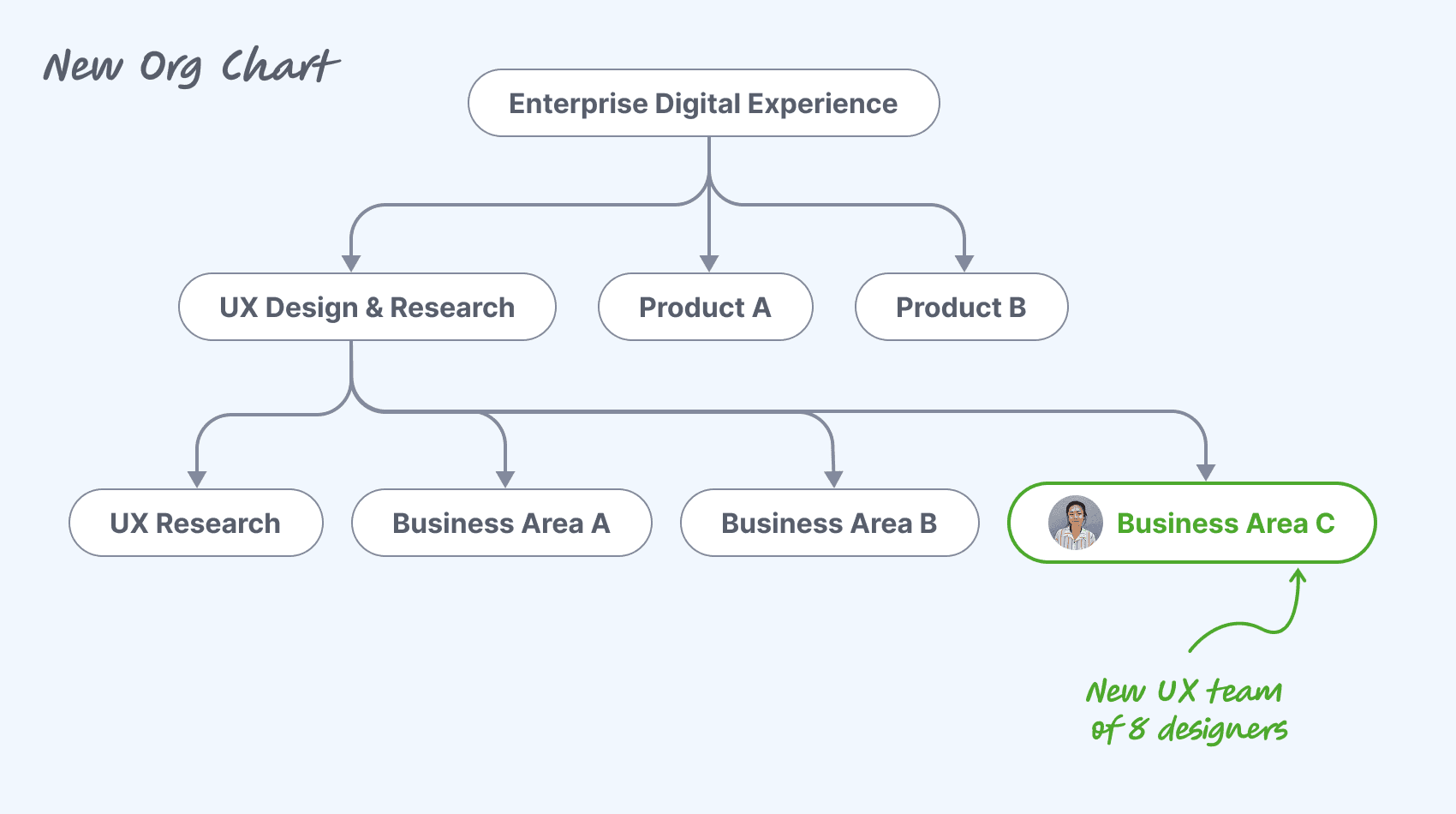
Seamlessly transition all design work from the external agency to the internal UX org. Ensure business continuity, maintain project velocity, uphold quality standards, and build a new design team.
With the help of 2 part-time UX designers, we quickly took ownership of nine (9) in-progress projects with minimal documentation, context, or clarity on design decisions. Beyond the transition, my focus was on rapidly aligning cross-functional partners to new, process-oriented workflows grounded in UX best practices.
I led with structure and clarity, aligning priorities across teams and maintaining consistent communication with key decision-makers.
I set clear expectations with new hires, cross-functional partners, and agency leads—establishing shared understanding of roles, timelines, and quality standards from the start.
This groundwork allowed us to stay focused, deliver effectively, and build trust throughout the transition.
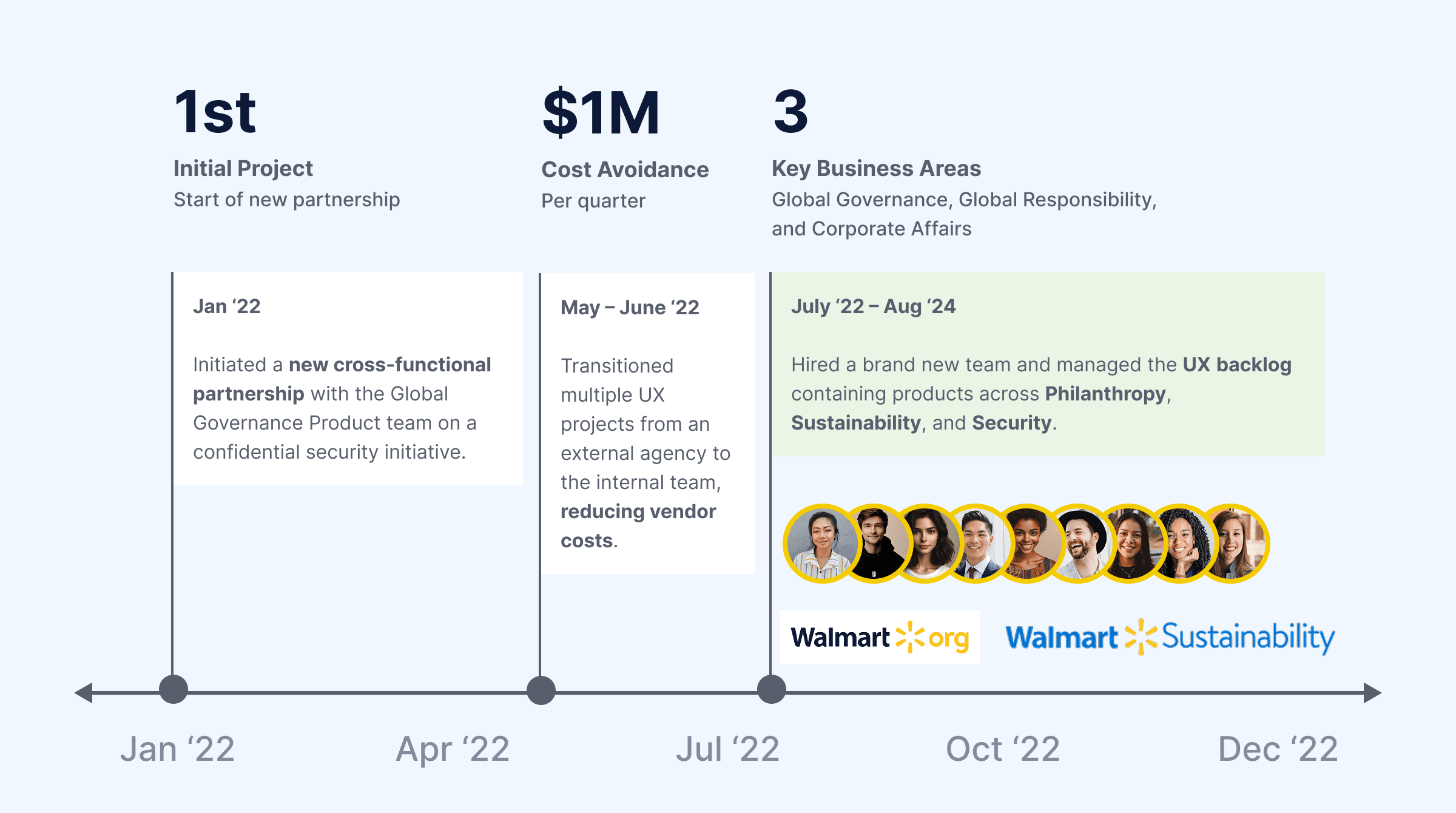
Overview of key milestones that structured the transition. Clear expectations and aligned priorities kept teams focused and delivery on track.
Balancing limited team bandwidth while actively hiring required difficult but necessary tradeoffs.
Our UX team received pushback for not being able to support all projects. I proposed focusing on the highest-impact work, while I continued to recruit and hire top talent for the team.
These choices helped us focus, deliver meaningful outcomes, and grow the team in a way that set us up for long-term success.
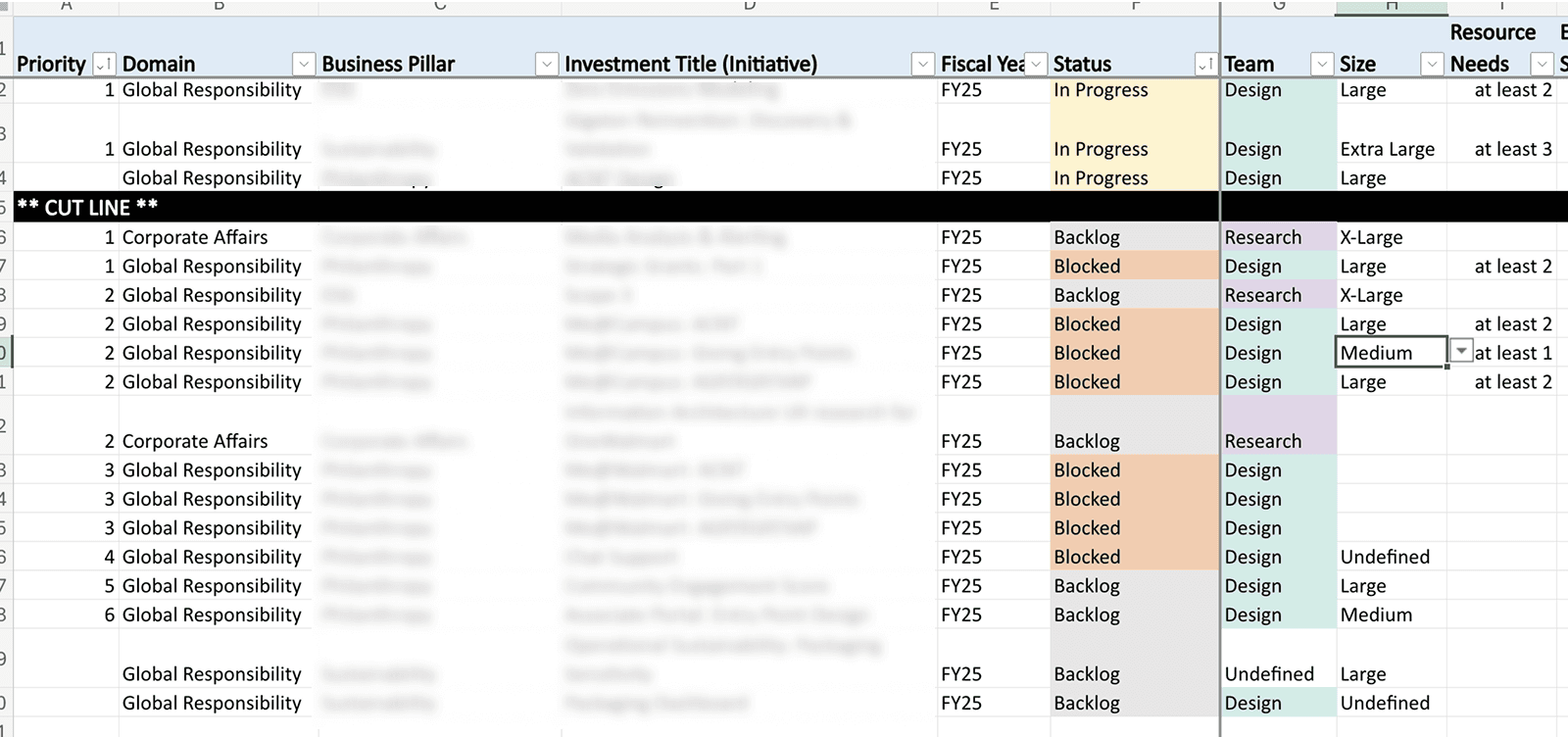
Projects below the "cut line" could not be supported due to limited resources or unclear scope. This helped track projects, anticipate future needs, and align resources across business pillars.

The strategic shift towards an in-house UX team gave us deeper visibility into the broader enterprise portfolio and uncovered additional UX needs. With an internal team in place, we were able to:
Scope and prioritize work more strategically for the year
Set clear expectations with partners
Ensure alignment with design system standards to improve product consistency
Most importantly, our embedded presence allowed us to evaluate the full ecosystem of internal and third-party tools across Corporate Responsibility—leading to more informed, experience-driven recommendations that improved user journeys from end to end.
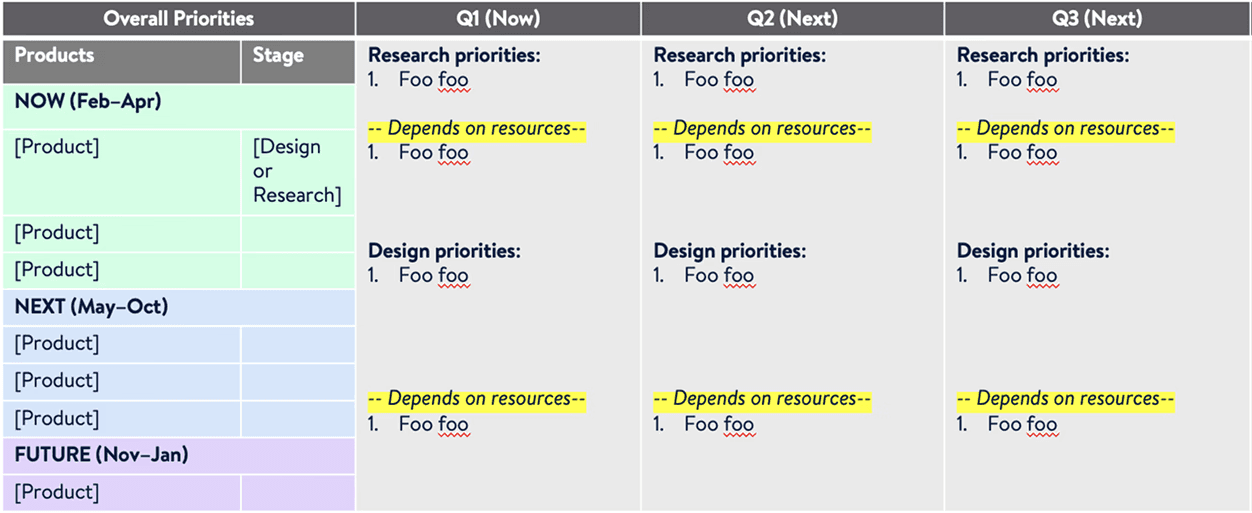
Template of the annual UX roadmap used to plan, align, and communicate design priorities across the enterprise.
ENTERPRISE METRICS
Driving Impact and Results
The transition delivered measurable impact across cost savings, team growth, and employee engagement. By shifting UX work in-house, we improved alignment, reduced expenses, and created a foundation for long-term scalability and cross-functional collaboration.
Cost Savings
Team Growth
Employee Engagement
Company Recognition
"Kristine's leadership in hiring and mentoring new designers was invaluable at a time when we were rapidly growing the team. She independently coordinated interviews with candidates and successfully hired skilled designers to support various technology design teams. Her expertise in UX design was critical to the growth and strengthening of our organization."

Laura B., VP of Associate Digital Experience
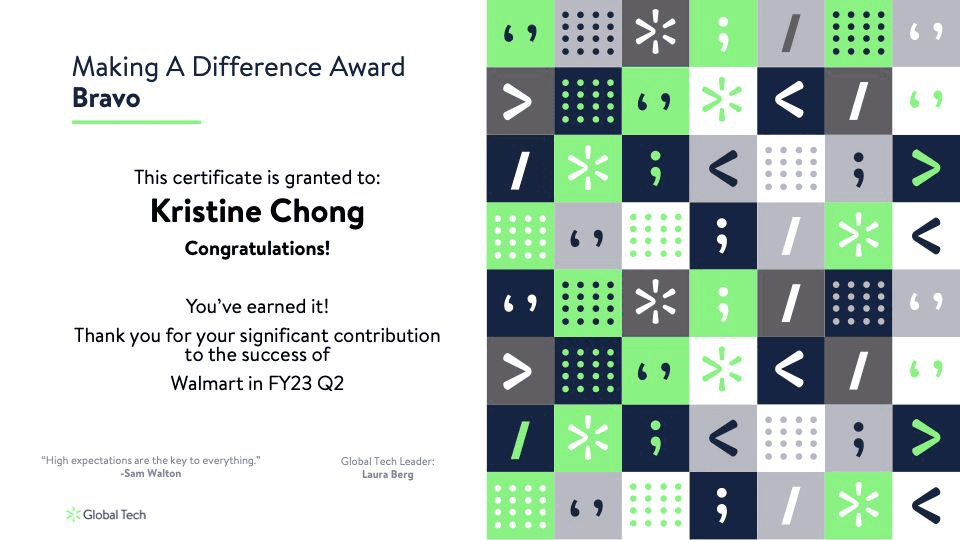
Received a "Making A Difference Award" for significant contributions to the success of Walmart in FY23 Q2.

Leading this transition reinforced several lessons about communication, advocacy, and operational clarity—especially when building trust in a newly formed team.
Pictured with designers and cross-functional partners across Austin, Dallas, Los Angeles, and Bentonville, Arkansas.