Building the Foundation: UX Operations at Scale
Walmart aimed to reduce costs through operational efficiency, which meant eliminating manual processes, streamlining critical workflows, and investing in technology. The digital transformation drove UX demand and team expansion into new areas of the business.
As the UX organization grew, teams got assigned to specific areas and developed their own ways of planning, prioritizing, and delivering work, hiring talent, and managing teams. Processes varied across teams, leading to inconsistent expectations, outcomes, and benchmarks for quality.
15+
INDUSTRY
Enterprise Software
BUSINESS OBJECTIVE
Operational Efficiency
MY ROLE
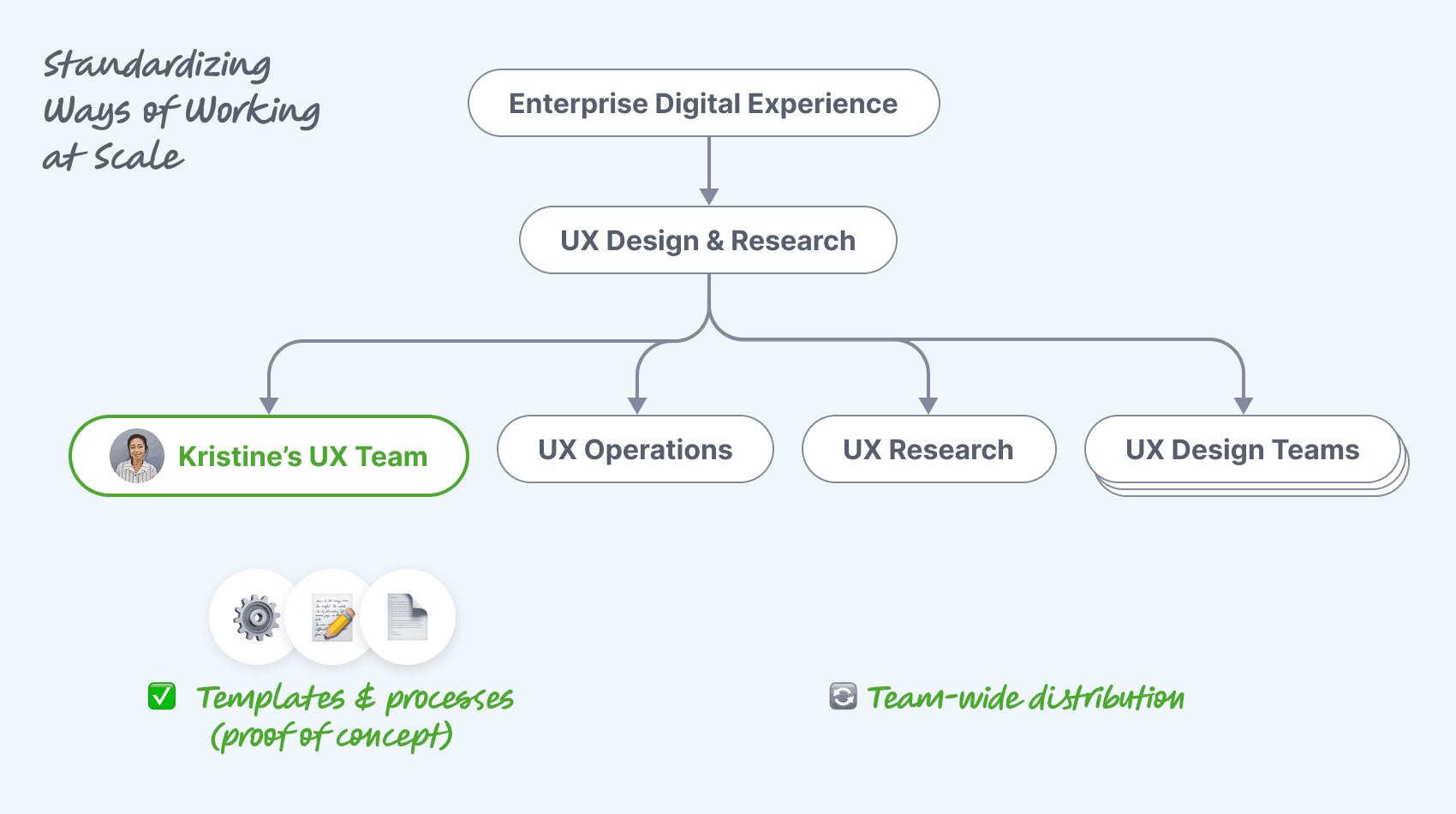
While leading my team as a Senior Manager, I contributed to the UX Operations team by repurposing documentation and workflows from my area into scalable templates. I created tools for recurring trackers and management tasks—starting as a proof of concept within my team and expanding them across peer UX teams in collaboration with Ops.
REACH
UX Operations team
6 Managers
100+ UX Researchers & Designers
THE PROBLEM
The lack of shared operational standards made it difficult to manage projects, align on expectations, and support hiring with consistency. Without unified systems, we struggled to maintain visibility, accountability, and a baseline for operational excellence.
THE SOLUTION
Design and implement a scalable set of templates and ways of working—spanning project management, team coordination, and workflows—to enable operational efficiency across UX teams.
Several operational gaps emerged as the UX teams and organization scaled, resulting in different levels of speed and efficiency. These issues spanned multiple facets of day-to-day work and strategic planning.
No Single Source of Truth
Critical information such as KPIs and use cases were scattered across multiple channels, making it difficult to find, maintain, or trust the latest information.
Inconsistent Intake & Prioritization
Teams prioritized UX work differently, leading to uneven practices and misaligned expectations.
Lack of Meeting Protocols
Meetings sometimes lacked structure and purpose with no clear outcomes or follow-up, delaying progress.
Workflow Knowledge Gaps
Each team understood Walmart's internal workflows differently, leading to miscommunication during onboarding.
Limited Accountability
It was difficult to track ownership dependencies, resulting in duplicate or missed efforts.
Inconsistent Hiring Practices
Lack of clarity around core competencies led to inconsistent staffing and inconsistent promotion decisions.
PROCESS & APPROACH
Standardizing Templates
for Designers and Managers
I created templates and guides for three (3) key areas: project management, team management, and ways of working. The documents provided structure that supported designers in their day-to-day work and managers in driving clarity, accountability, and performance.

Statement of Work
Documents project scope and outlines problems to be understood or solved for and why.

UX Project Management
Tracks timeline, use cases, metrics, key contacts, and prioritization of capabilities in one central location.
Use Case Tracker
Tracks use cases by user, type, data source, and level of confidence.
UX Metrics Tracker
Tracks UX metrics using user pathways as indicators of success.
Project Roles & Responsibilities
Outlines accountability for project deliverables and day-to-day tasks such as file organization and team communication.
UX Portfolio Management
Tracks UX project requests, project statuses, project size, resource needs, and UX prioritization.
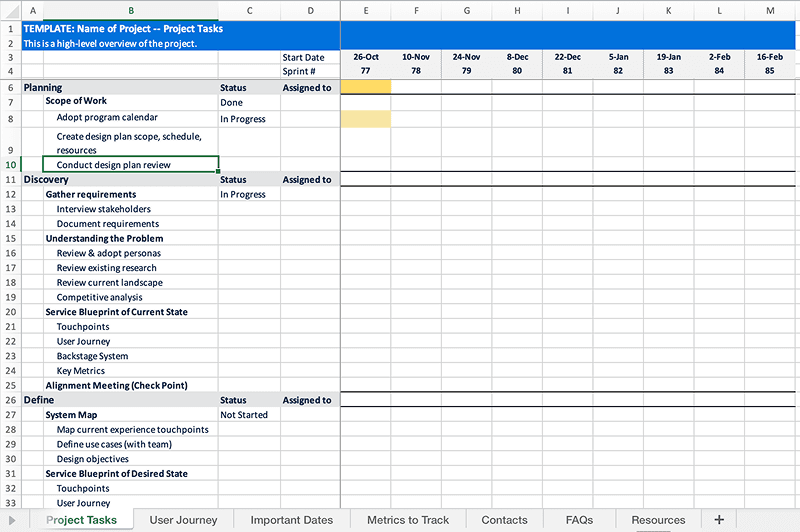
UX Project Management Template
Job Descriptions
Standardizes job descriptions from entry to management level for external-facing job postings.
Candidate Tracker
Tracks full-time and vendor candidates, requisition numbers, onboarding status, and more.
Quarterly Evaluations
Evaluates quarterly progress against job competencies, expectations, and organization goals.
Staff Meeting Agendas
Outlines topics for each staff meeting, ensuring meetings are informative and valuable to the team.

1:1 Meeting Notes
Documents notes for 1:1 meetings, especially between managers and direct reports, keeping questions, concerns, and career goals in one collaborative location.
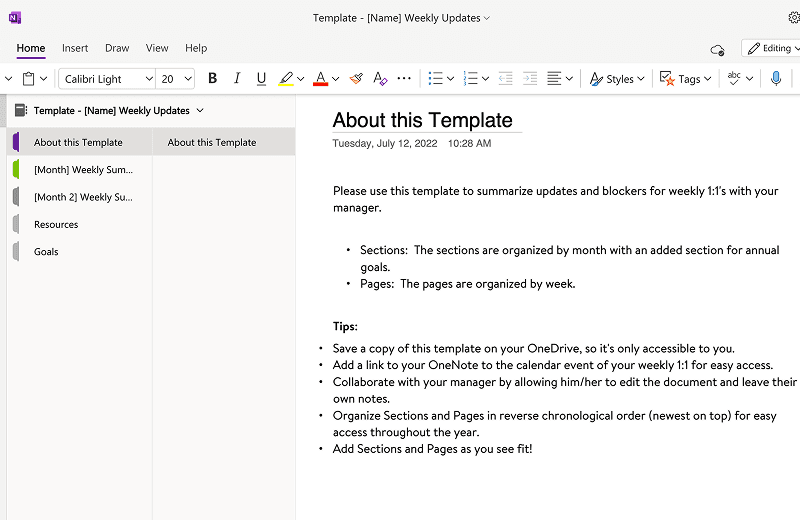
1:1 Meeting Notes Template

Guide to UX/UI Deliverables
Catalog of UX and UI deliverables describing their purpose, benefits, when to use them, and what they might look like.
Productivity Tips
Deck containing tips on how to leverage existing tools to work better together.
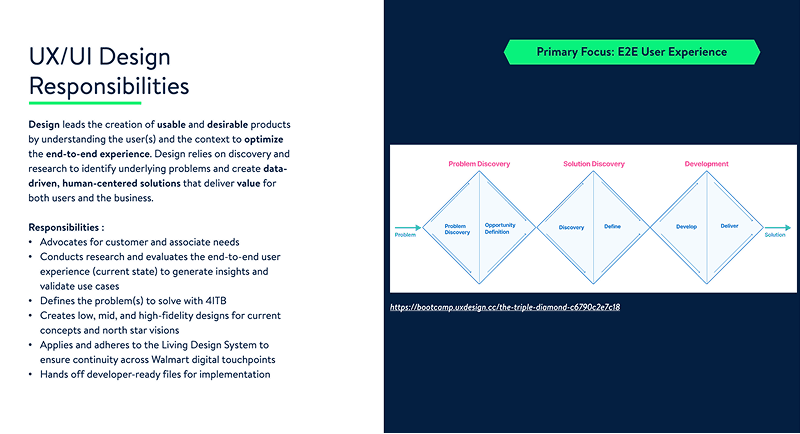
Guide to UX/UI Deliverables

I presented candidate screening techniques to UX leadership, Talent Partner, and UX Operations. This helped bridge the gap between job descriptions and how we assessed qualifications in practice.
Once refined, the templates were shared with the UX Operations team and distributed org-wide, including to the Director of Design and Research, who focused on leveling job expectations.
The effort to standardize ways of working involved training a select group of UX leads so they could set the standard for what “good” looked like.
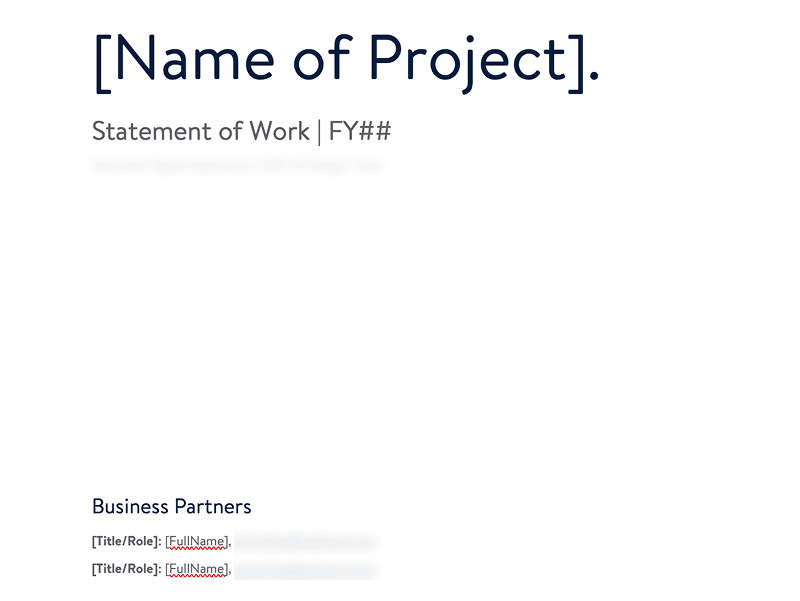
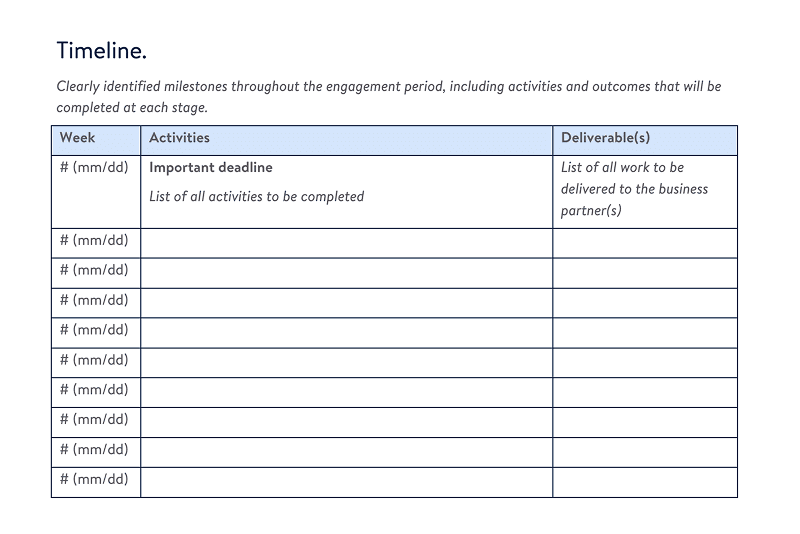
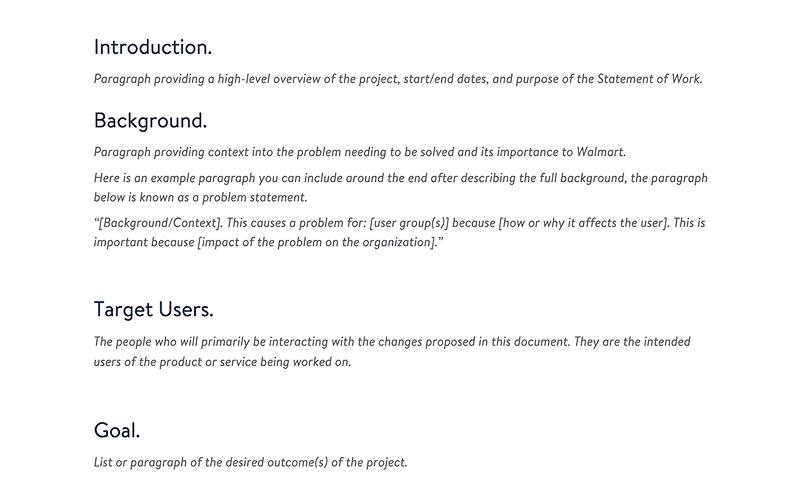
The Statement of Work (SOW) became the most widely adopted and impactful template.
ENTERPRISE METRICS
Impact and Reach
The templates were shared across the organization and integrated into broader UX operational efforts, extending their reach beyond my immediate team.
Teams that adopted the full toolkit reported:
More stable stakeholder relationships, with clearer expectations from project start
Improved file structures and better documentation hygiene
Greater project predictability, supporting better time and capacity planning
More time and focus for UX metrics, strategy, and design quality
Reach
Voluntary Adoption
Company Recognition
Kristine was recognized at the end of the year for her contributions as a "Strong Collaborator" within the Associate Digital Experience organization.
Her ability to standardize processes and adapt to shifting priorities was instrumental in the success of her team and the technology products she supported.

Laura B., VP of Associate Digital Experience
The rollout offered valuable insights into what it takes to operationalize change across a large design organization.
The experience reinforced that change doesn't happen through tools alone—it requires alignment, trust, and a shared vision for how we work better together.